Team
Research Team
Our talented University of Minnesota team analyzes, translates, and disseminates emerging best practice and policy. Our interdisciplinary approach includes psychology, child psychology, clinical psychology, sociology, public health, and nursing.
The Shlafer Program is a diverse and inclusive space in which mentoring is a value and a verb.


Ingie Osman
Project Director
Enhanced Perinatal Programs for People in Prison (E4P)

Abaki Beck
Doctoral Candidate
Health Services Research, Policy, and Administration

Freddie Corcoran
Doctoral Candidate
Institute of Child Development

Katie Pierson
Communications Strategist

Karenna Thomas
Research Staff
Social and Behavioral Sciences
US Health and Justice
Maternal and Child Health
Contact Us
Principal Investigator
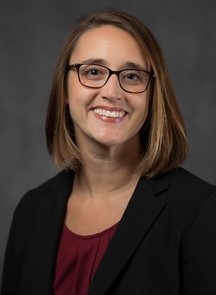
Rebecca Shlafer, PhD, MPH
Department of Pediatrics
Division of General Pediatrics and Adolescent Health
University of Minnesota
717 Delaware Street SE, Room 382
Minneapolis, MN 55414
[email protected]
612-625-9907
External Partners
Teamwork powers our efforts to change systems.
These external partners help us build momentum and impact:
Amherst H. Wilder Foundation
Amherst H. Wilder Foundation’s convening of the Strengthening Families Affected by Incarceration Coalition resulted in our analysis of the Minnesota Student Survey and a series of one-pagers and infographics that show stakeholders the layered impacts of having an incarcerated parent.
Minnesota Department of Health
MDH Family Home Visiting Program
Minnesota Department of Health’s Family Home Visiting (FHV) program partners with us to co-develop and continuously improve a comprehensive research and evaluation agenda, to connect FHV research and practice, and explore potential collaborations between FHV and criminal justice settings.
Minnesota Model Jail Practices Learning Community
The MN Department of Health partners with us to facilitate the Minnesota model jail practices learning community. We engage jail facilities and community partners at the state and local levels to help implement policy, systems, and environmental changes that benefit children of incarcerated parents and their families.
Minnesota Department of Corrections
The Minnesota Department of Corrections works with us and our community partners to improve birth and infant health outcomes, strengthen parent-child attachment, and offer supports to children of incarcerated parents.