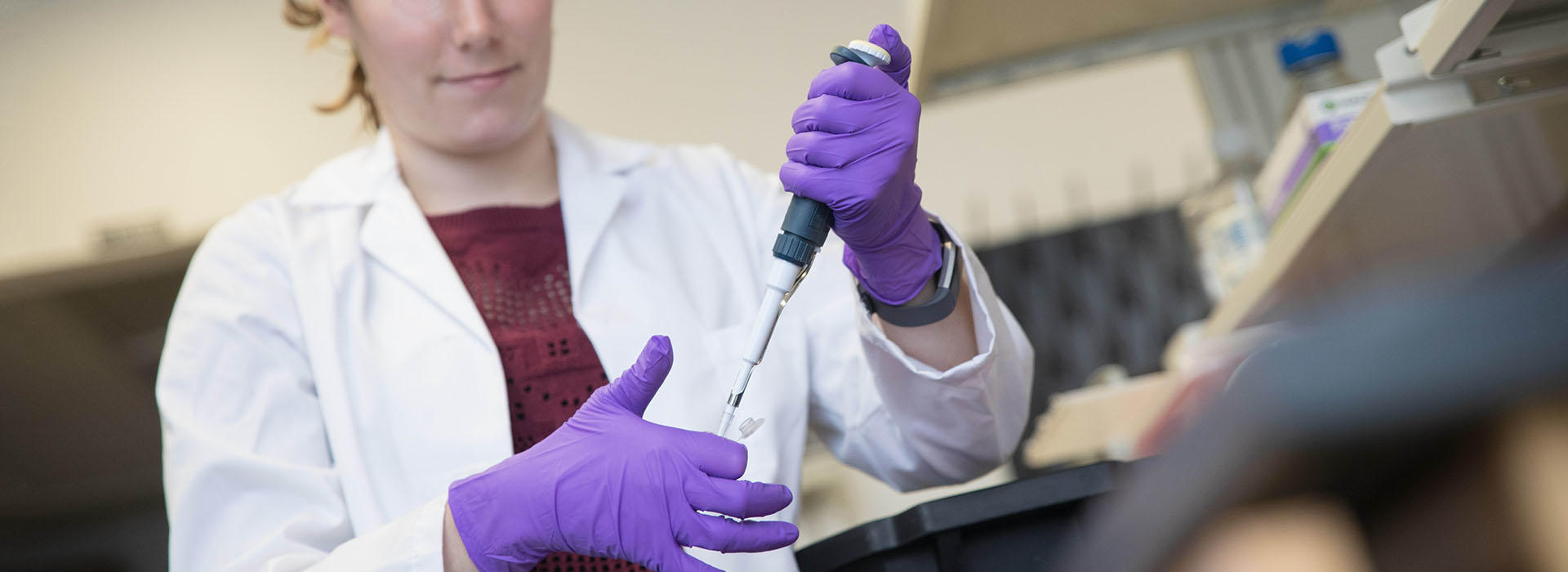
Research
Undergraduate and graduate students work with faculty in their research labs to further our understanding in many areas related to biochemistry, molecular biology and biophysics while developing their research techniques and expertise. Faculty labs carry out investigator-initiated research projects as well as projects linked to larger collaborations.
Elias Lab
The Elias Lab investigates the mechanisms by which biological molecules evolve, the molecular basis of their functions, and develop methods for their engineering, with the aim of developing efficient, soft solutions to current or emerging society issues.
Freeman Lab
The Freeman Lab uses cutting-edge and classical techniques in biochemistry, microbiology, metagenomics, and mass spectrometry to investigate unconventional peptide-based metabolites and pathways invoking radical-mediated chemistry.
Gardner Lab
The Gardner Lab uses a combination experimental and computational approach to dissect molecular mechanisms for how cells divide, and for how cell division can be controlled to prevent genetic diseases, pathogenic anti-fungal drug resistance, and cancer.
Goldstrohm Lab
The Goldstrohm Lab seeks to understand how messenger RNAs are regulated. Regulation of translation, degradation and localization of mRNAs contributes to the enormous dynamic range of protein expression. Their research focuses on two important classes of regulatory factors: pumilio proteins and specialized ribonucleases known as deadenylases.
Gordon Lab
The Gordon Lab aims to decode the molecular mechanisms utilized by cellular proteins to sense and respond to force in hopes of revealing new “mechano-some” based therapeutic and diagnostic avenues.
Griffin Lab
The Griffin Lab develops bioinformatic tools enabling integration proteomic and metabolomic data with genomic information, providing a better understanding of how variations to the genome might affect cellular function.
Kazlauskas Lab
The Kazlauskas Lab designs and evolves enzymes for biocatalysis. Biocatalysis is the use of enzymes for chemical manufacture. Creating new enzymes for enantioselective formation of carbon-carbon bonds would expand the range of chemicals that can be manufactured using enzymes.
Kim Lab
The Kim Lab is interested in understanding how cells handle energy stress for homeostasis, growth and survival. Their main research focus is on energy and nutrient-sensing mechanisms in cells via mTOR, and how the mechanisms operate to maintain energy and protein homeostasis.
Latham Lab
The Latham Lab is focused on understanding the interplay of protein structure, dynamics, and function, particularly in large macromolecular assemblies.
Mashek Lab
The Mashek Lab focuses on the relationship between lipid metabolism and disease development. A primary emphasis is on studies involving lipid droplet biology in the context of non-alcoholic fatty liver disease, type 2 diabetes, cancer and aging.
Niedernhofer Lab
The Niedernhofer lab is part of the Medical Discovery Team on Aging and the Institute on the Biology of Aging and Metabolism. Research in the Niedernhofer lab is focused on studying the biology that drives aging.
Parker Lab
The Parker lab focuses on assay development for post-translational modifications, with an emphasis on protein phosphorylation by tyrosine kinases. The lab uses chemical biology and proteomics to develop tests to quickly screen for better inhibitor drugs, and/or determine effectiveness of inhibitors to improve patient outcomes during cancer treatment.
Rivera-Mulia Lab
Research in the Rivera-Mulia Lab focuses on understanding how DNA replication timing and large-scale chromosome organization are regulated, maintained in distinct cell types and remodeled during development.
Robbins Lab
The Robbins Lab is part of the Institute on the Biology of Aging and Metabolism and the Medical Discovery Team on Aging. The Robbins Lab is focused on what drives aging and ways to intervene and slow the process in a targeted and effective manner.
Schmidt-Dannert Lab
The Schmidt-Dannert Lab is developing and investigating biological systems that will enable the sustainable synthesis of valuable chemical compounds and fabrication of new types of functional materials through biological design.
Seelig Lab
The Seelig Lab is implementing Darwinian molecular evolution methods in the laboratory to engineer artificial proteins. They generate novel enzymes with custom-made properties for synthetic biology and biomedical applications.
Smanski Lab
The Smanski Lab leverages the latest advances in synthetic biology, biochemistry, and chemistry to understand and engineer complex systems.
Thomas Lab
The Thomas Lab looks to understand the fundamental molecular motions and interactions that are responsible for cellular movement, to determine the molecular bases of muscle disorders, and to devise novel therapies based on these discoveries.
Truong Lab
Research in the Truong Lab is focused on the areas of cancer stem cells (CSCs), therapy resistance, steroid receptors (SRs), and cancer metabolism.
Veglia Lab
Research in the Veglia Lab focuses on two critical aspects of cell regulation: cAMP-mediated cell signaling and calcium transport.